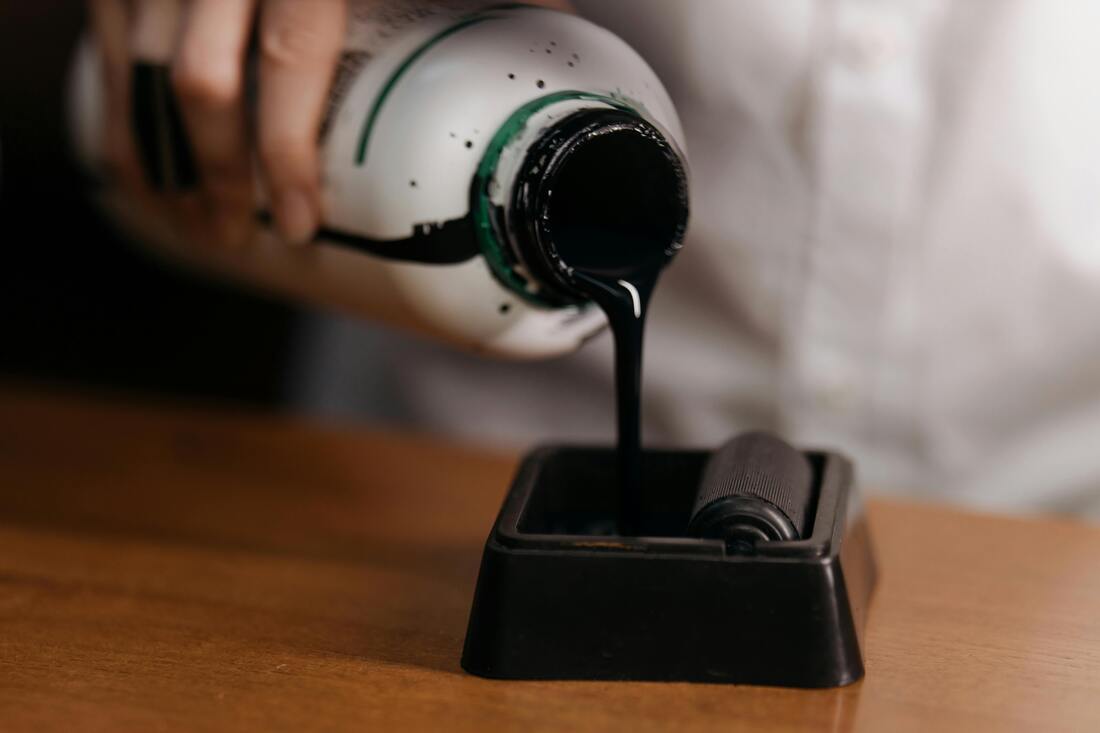
An ink refill bottle is just a container of liquid ink you use to fill up your printer's ink tanks or cartridges. You'll usually find these with printers that have refillable tanks (like EcoTank or MegaTank) and when you're manually refilling cartridges.
🌈 Types of Ink
Ink is made with different stuff, which impacts how it prints, how fast it dries, and what it works with.
* **Dye-based ink:** Uses dyes that dissolve in water. Good for bright colors, smooth transitions, and cheap printing. Great for photos, documents, and anything with color.
* **Pigment-based ink:** Uses tiny solid bits of pigment. This ink is water and fade-resistant, and makes text look crisp. Perfect for important papers that need to last.
* **Sublimation ink:** Turns into a gas when heated. Used to transfer colors to polyester or coated stuff. Think mugs and t-shirts!
* **Solvent/Eco-solvent ink:** Uses a chemical to dissolve the color. It's waterproof and can handle the outdoors. Great for signs and banners.
* **UV ink:** Hardens instantly under UV light. It’s thick, doesn't scratch easily, and sticks to tons of things. Used for industrial, 3D, and special printing projects.
🖨️ What Works with What?
Always use the right ink for your printer.
* **Inkjet (dye-based):** Use dye or pigment ink. Double-check to see which one your printer prefers.
* **Refillable tank printers:** Use the ink the manufacturer suggests (dye or pigment). Just pour it in the right spot.
* **Cartridge printers (refillable):** Use syringes and bottles to refill. Make sure the colors match (C, M, Y, K).
* **Sublimation printer:** Only use sublimation ink. Other inks will mess it up.
* **Large-format / plotter:** Use pigment or eco-solvent. What you pick depends on what you're printing on and what it's for.
🎨 Colors
* **Standard:** Cyan, Magenta, Yellow, Black (CMYK).
* **More colors (for photos):** Light Cyan, Light Magenta, Gray, Red, Blue, etc.
* **Special inks:** White, metallic, and fluorescent (for design or fabrics).
🧪 Things to Think About
* **Thickness (Viscosity):** If it’s too thick, it clogs. If it’s too thin, it leaks.
* **Surface tension:** Impacts how the ink drops form, which affects how precise your prints are.
* **Color strength:** How strong the color is. It decides how vibrant your prints look
* **Acidity (pH):** Needs to be right for your printer.
* **How fast it dries:** Affects smudging and print speed.
* **Fade-resistance (Lightfastness):** How well it resists fading. Matters for important stuff you want to keep.
🧰 Quick Refills
Cartridge refills:
1. Take the cartridge out.
2. Find the fill spot (usually under the label).
3. Use a syringe to put ink in slowly.
4. Seal the hole (tape works).
5. Give it a few to sit before putting it back.
Tank printers:
1. Open the ink tank.
2. Stick the nozzle or bottle in gently.
3. Fill to the line.
4. Close it up and wipe up any spills.
5. Run a printhead cleaning thing.
⚠️ Be Careful!
* Never mix dye and pigment inks – they'll clump.
* Don't mix colors – use different tools for each.
* Keep bottles standing up, away from sun and heat.
* Shake pigment inks gently before using.
* Wear gloves and protect your surfaces.
* Keep caps tight to keep air out.
* Don’t refill if the ink is old or junky.
* Test your nozzles after refilling.
🧼 Cleaning
* Clean printheads with warm water (for dye ink) or cleaning stuff (for pigment ink).
* Skip alcohol unless it says it's okay.
* Run your printer's cleaning cycle often.
* If it’s clogged, soak the printhead on a damp cloth with warm water.
🌍 Storing
* Lasts 1–2 years (unopened), 6–12 months (opened).
* Keep at 15–30°C, out of sunlight.
* Bad ink: thick, stinky, weird color, or chunky.
🔍 Safety
* Most inks are water-based and not dangerous, but not all.
* Don’t dump ink down the drain.
* Recycle bottles.
* Keep away from kids and pets.
🌈 Types of Ink
Ink is made with different stuff, which impacts how it prints, how fast it dries, and what it works with.
* **Dye-based ink:** Uses dyes that dissolve in water. Good for bright colors, smooth transitions, and cheap printing. Great for photos, documents, and anything with color.
* **Pigment-based ink:** Uses tiny solid bits of pigment. This ink is water and fade-resistant, and makes text look crisp. Perfect for important papers that need to last.
* **Sublimation ink:** Turns into a gas when heated. Used to transfer colors to polyester or coated stuff. Think mugs and t-shirts!
* **Solvent/Eco-solvent ink:** Uses a chemical to dissolve the color. It's waterproof and can handle the outdoors. Great for signs and banners.
* **UV ink:** Hardens instantly under UV light. It’s thick, doesn't scratch easily, and sticks to tons of things. Used for industrial, 3D, and special printing projects.
🖨️ What Works with What?
Always use the right ink for your printer.
* **Inkjet (dye-based):** Use dye or pigment ink. Double-check to see which one your printer prefers.
* **Refillable tank printers:** Use the ink the manufacturer suggests (dye or pigment). Just pour it in the right spot.
* **Cartridge printers (refillable):** Use syringes and bottles to refill. Make sure the colors match (C, M, Y, K).
* **Sublimation printer:** Only use sublimation ink. Other inks will mess it up.
* **Large-format / plotter:** Use pigment or eco-solvent. What you pick depends on what you're printing on and what it's for.
🎨 Colors
* **Standard:** Cyan, Magenta, Yellow, Black (CMYK).
* **More colors (for photos):** Light Cyan, Light Magenta, Gray, Red, Blue, etc.
* **Special inks:** White, metallic, and fluorescent (for design or fabrics).
🧪 Things to Think About
* **Thickness (Viscosity):** If it’s too thick, it clogs. If it’s too thin, it leaks.
* **Surface tension:** Impacts how the ink drops form, which affects how precise your prints are.
* **Color strength:** How strong the color is. It decides how vibrant your prints look
* **Acidity (pH):** Needs to be right for your printer.
* **How fast it dries:** Affects smudging and print speed.
* **Fade-resistance (Lightfastness):** How well it resists fading. Matters for important stuff you want to keep.
🧰 Quick Refills
Cartridge refills:
1. Take the cartridge out.
2. Find the fill spot (usually under the label).
3. Use a syringe to put ink in slowly.
4. Seal the hole (tape works).
5. Give it a few to sit before putting it back.
Tank printers:
1. Open the ink tank.
2. Stick the nozzle or bottle in gently.
3. Fill to the line.
4. Close it up and wipe up any spills.
5. Run a printhead cleaning thing.
⚠️ Be Careful!
* Never mix dye and pigment inks – they'll clump.
* Don't mix colors – use different tools for each.
* Keep bottles standing up, away from sun and heat.
* Shake pigment inks gently before using.
* Wear gloves and protect your surfaces.
* Keep caps tight to keep air out.
* Don’t refill if the ink is old or junky.
* Test your nozzles after refilling.
🧼 Cleaning
* Clean printheads with warm water (for dye ink) or cleaning stuff (for pigment ink).
* Skip alcohol unless it says it's okay.
* Run your printer's cleaning cycle often.
* If it’s clogged, soak the printhead on a damp cloth with warm water.
🌍 Storing
* Lasts 1–2 years (unopened), 6–12 months (opened).
* Keep at 15–30°C, out of sunlight.
* Bad ink: thick, stinky, weird color, or chunky.
🔍 Safety
* Most inks are water-based and not dangerous, but not all.
* Don’t dump ink down the drain.
* Recycle bottles.
* Keep away from kids and pets.